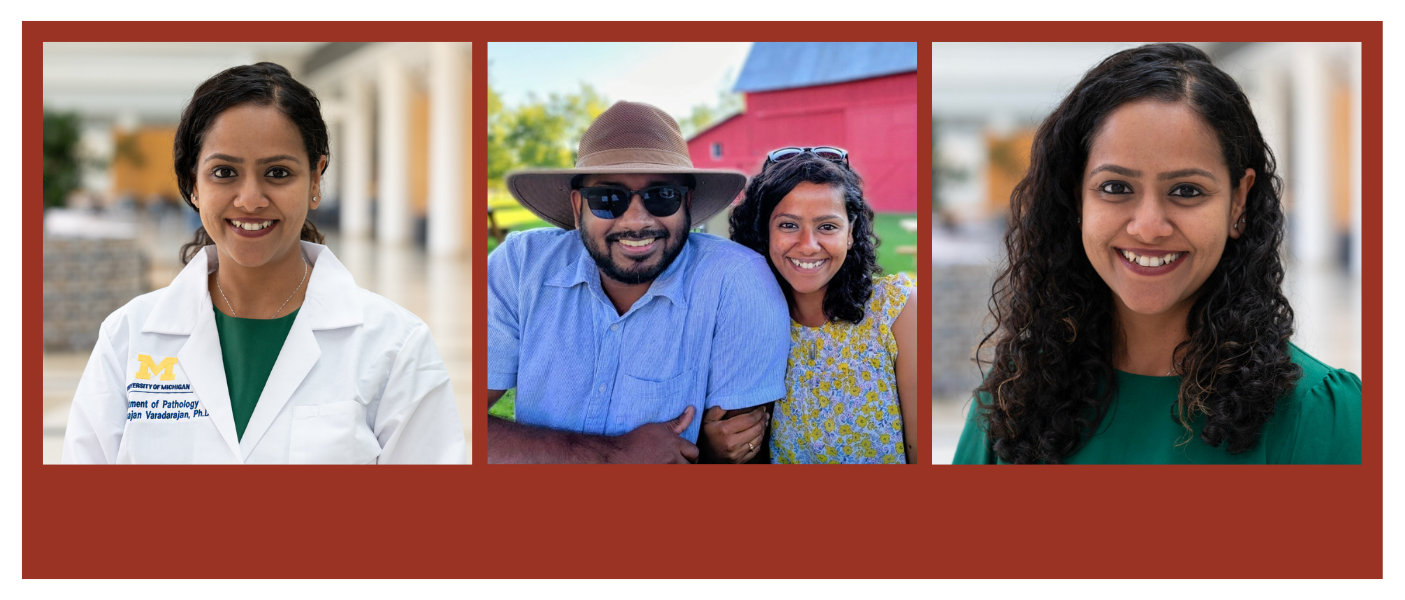
 When Dr. Sara Varadarajan stepped into her new faculty role on April 1, it marked a professional milestone in her scientific journey. Her path has been shaped by curiosity, resilience, and a deep commitment to understanding how tissues heal and restore balance after injury. Most recently, Varadarajan received a prestigious NIH K99/R00 Pathway to Independence Award from the National Institute of Allergy and Infectious Diseases (NIAID). This award will support her emerging independent research program focused on the mechanobiology of mucosal wound healing during inflammation and tissue injury.
Born and raised in Chennai, India, Varadarajan’s fascination with biology began early. Her mother, a high school biology teacher, often brought her into the classroom and laboratory during school breaks. There, young Sara watched students dissect specimens and examine tissues under the microscope, moments that sparked a lasting sense of wonder. “Looking at things under the microscope was always fascinating,” she recalls. “That’s where it started.”
She completed her bachelor’s training in India in an engineering-focused program but soon realized her passion lay in cell biology. That realization brought her to the United States, where she pursued a master’s degree to deepen her training in biological sciences. Not yet ready for a PhD program, Varadarajan took a position as a research technician at the University of Michigan, an institution that would become her scientific home for years to come. Working in the labs of Khalil Bitar and Dr. Gabriel Núñez, she developed a strong interest in intestinal homeostasis and regeneration, experiences that ultimately led her to pursue a PhD in the Molecular, Cellular, and Developmental Biology program at the University of Michigan.
 As a doctoral student in Dr. Ann Miller’s lab, Varadarajan studied epithelial cells, which form protective barriers in tissues such as the intestine. Her work focused on understanding how these barriers maintain integrity under the constant mechanical strain generated by physiological intestinal movements such as peristalsis. Using the African clawed frog embryo as a model system, Varadarajan discovered that epithelial cells actively sense mechanical strain through transient calcium signaling events. When junctions are stressed or briefly disrupted, calcium enters the cell through mechanosensitive calcium channels and triggers localized RhoA activation, termed “Rho flares”, to help reseal the barrier.
This work was among the first to describe how cells actively detect and repair microscopic breaks in their connections, a finding with important implications for diseases characterized by barrier dysfunction, such as inflammatory bowel disease. The research was published in the Journal of Cell Biology and laid a strong conceptual foundation for her future work.
Varadarajan wanted to move beyond development and into disease. For her postdoctoral training, she joined the labs of Dr. Charles Parkos and Dr. Asma Nusrat, where she found the ideal environment to unite her interests in epithelial biology and immune responses. There, her research focused on the crosstalk between epithelial cells and neutrophils during intestinal wound healing. Neutrophils, a type of immune cell, play a paradoxical role. They are essential for initiating repair, but excessive neutrophil activity causes tissue damage and prevents healing. Using mouse models of intestinal injury, Varadarajan is examining how neutrophils are recruited to wound sites, what they do once they arrive, and how neutrophil-epithelial crosstalk promotes effective wound healing. Her work seeks to explain how balance, rather than extremes, determines successful healing.
In a parallel project, Varadarajan, in collaboration with her colleague Dr. Shuling Fan, identified the apical polarity protein Crumbs homolog 3 (CRB3) as an important regulator of the apical junction complex (AJC) assembly and barrier function in the intestinal epithelium. They showed that CRB3 works together with the cytoskeletal linker protein Merlin (NF2) to regulate actomyosin contractility and junction remodeling during both tissue repair and inflammation. These findings, published in JCI Insight, reinforced her growing interest in how mechanical forces influence inflammatory signaling and wound healing.
Now a research investigator and newly appointed faculty member, Varadarajan is beginning to shape her independent research program centered on the mechanobiology of wound healing in inflammatory diseases. Supported by her newly awarded K99/R00 grant, her work seeks to uncover how epithelial cells sense mechanical stress, coordinate immune responses, and regulate tissue repair during mucosal inflammation. By integrating cell biology, immunology, and tissue mechanics, she hopes to better understand why healing succeeds in some contexts but fails in chronic inflammatory diseases such as ulcerative colitis.
Her path has not been without challenges. As an international scientist, Varadarajan often encountered funding restrictions that limited eligibility for many traditional grants. Rather than deterring her, these limitations taught her persistence. “You give it your best shot,” she says, “regardless of whether you think you’ll get it.” She credits private foundations (Crohn’s and Colitis Foundation, American Heart Association), strong mentorship, institutional support, and adaptability for helping her navigate setbacks.
Mentorship remains central to her professional philosophy. She credits strong mentorship throughout her training for helping her navigate those challenges. Mentors, including Dr. Miller, Dr. Parkos, and Dr. Nusrat, encouraged her to take intellectual risks, embrace collaboration, and stay open to new scientific directions. These lessons now shape how she hopes to mentor future trainees in her own lab.
Outside the lab, maintaining balance has been equally important for Varadarajan. In addition to her passion for research, she enjoys teaching and mentoring students and has taught undergraduate courses in cell biology and genetics. She hopes to continue creating learning environments that connect textbook concepts to real scientific questions and discovery.
 She credits her spouse, Hari Kalluri, an automotive engineer in Metro Detroit, as a constant source of support throughout graduate school, postdoctoral training, and the transition to faculty life. “Science can be intense, and having someone who understands the ups and downs makes a huge difference,” she says. Together, they enjoy hiking, visiting national parks, gardening, and spending time outdoors, which provides grounding and balance amid the intensity of academic research.
As she begins this next chapter, Varadarajan is focused not only on building a successful research program but also on fostering an environment that values curiosity, collaboration, and balance. Her work continues to center on a fundamental question of how tissues maintain and restore balance after injury and inflammation.
****
Citations:
Varadarajan S, Chumki SA, Stephenson RE, Misterovich ER, Wu JL, Dudley CE, Erofeev IS, Goryachev ABB, Miller AL. Mechanosensitive calcium flashes promote sustained RhoA activation during tight junction remodeling. J Cell Biol (2022) 221(4):e202105107. https://doi.org/10.1083/jcb.202105107
Fan S, Varadarajan S, Garcia-Hernandez V, Flemming S, Raya-Sandino, A, Margolis B, Parkos CA, Nusrat A. CRB3 and NF2 orchestrate cytoskeletal dynamics to control epithelial barrier assembly. JCI Insight (2025); 10(20):e196350. https://doi.org/10.1172/jci.insight.196350
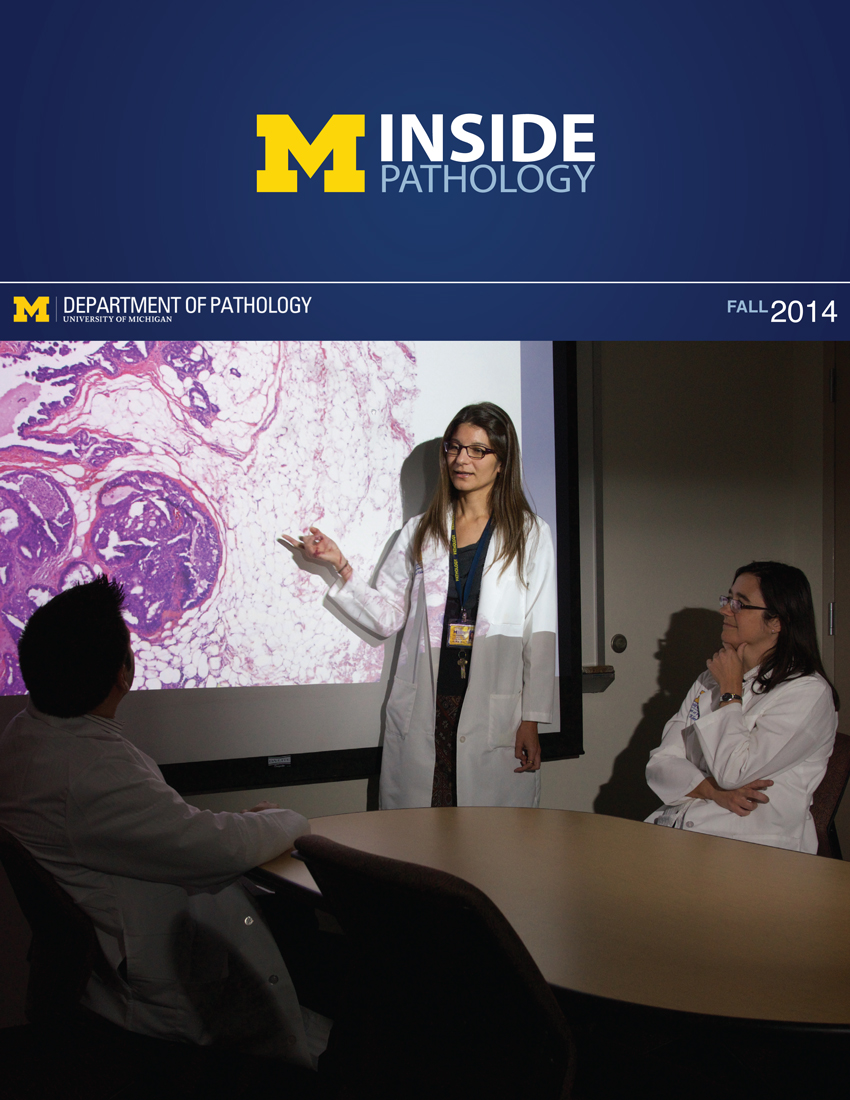 ON THE COVER
Breast team reviewing a patient's slide. (From left to right) Ghassan Allo, Fellow; Laura Walters, Clinical Lecturer; Celina Kleer, Professor. See Article |
newsletter
INSIDE PATHOLOGYAbout Our NewsletterInside Pathology is an newsletter published by the Chairman's Office to bring news and updates from inside the department's research and to become familiar with those leading it. It is our hope that those who read it will enjoy hearing about those new and familiar, and perhaps help in furthering our research. CONTENTS
|
 ON THE COVER
Autopsy Technician draws blood while working in the Wayne County morgue. See Article |
newsletter
INSIDE PATHOLOGYAbout Our NewsletterInside Pathology is an newsletter published by the Chairman's Office to bring news and updates from inside the department's research and to become familiar with those leading it. It is our hope that those who read it will enjoy hearing about those new and familiar, and perhaps help in furthering our research. CONTENTS
|
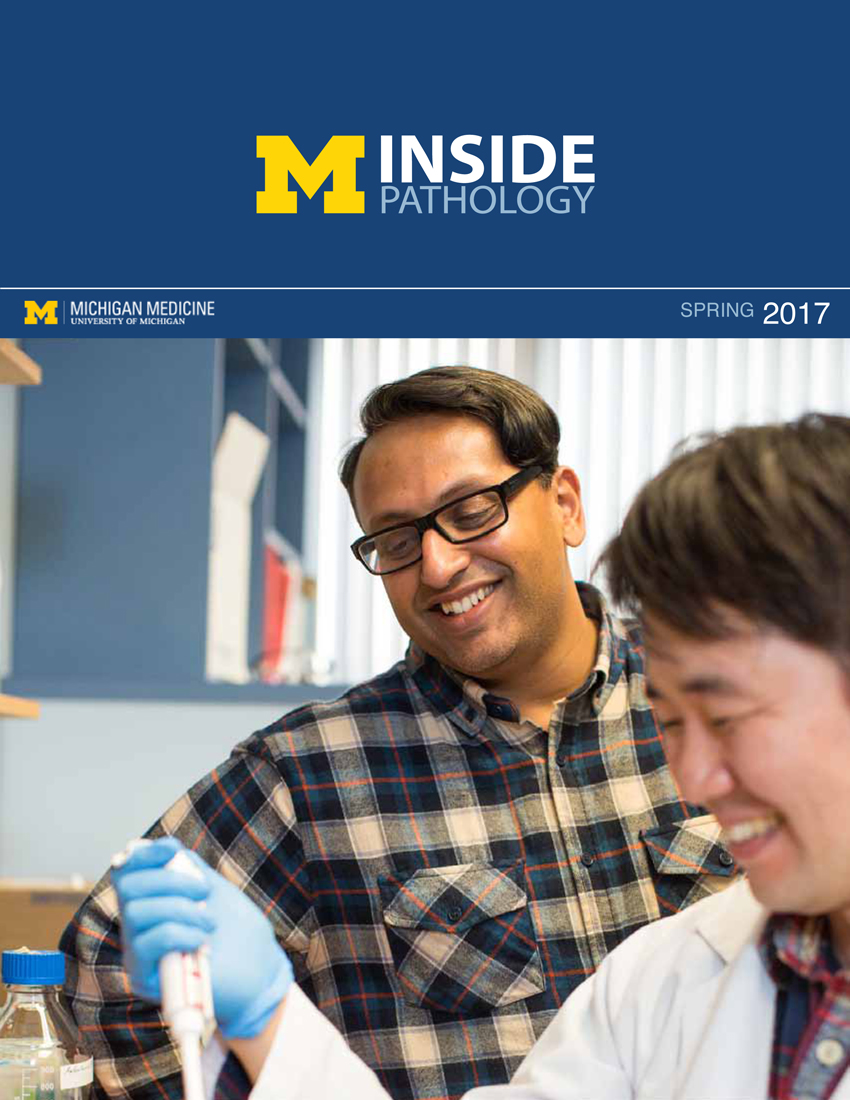 ON THE COVER
Dr. Sriram Venneti, MD, PhD and Postdoctoral Fellow, Chan Chung, PhD investigate pediatric brain cancer. See Article |
newsletter
INSIDE PATHOLOGYAbout Our NewsletterInside Pathology is an newsletter published by the Chairman's Office to bring news and updates from inside the department's research and to become familiar with those leading it. It is our hope that those who read it will enjoy hearing about those new and familiar, and perhaps help in furthering our research. CONTENTS
|
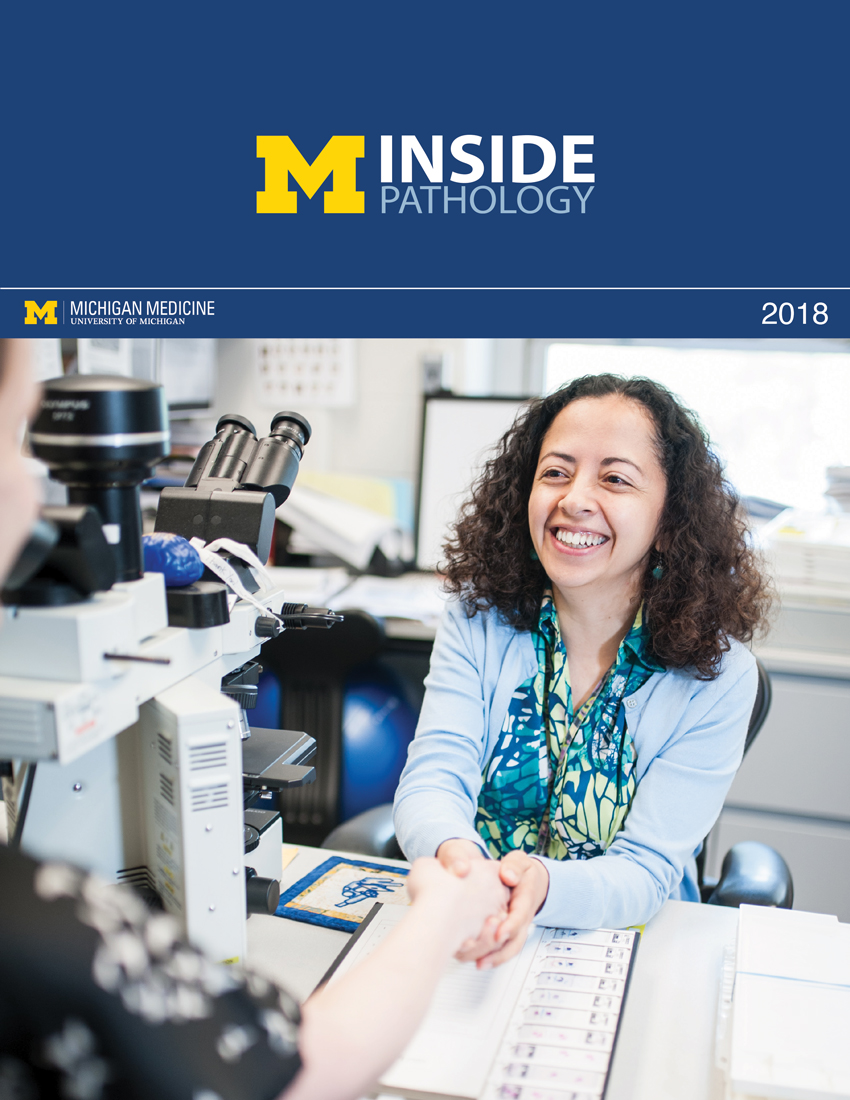 ON THE COVER
Director of the Neuropathology Fellowship, Dr. Sandra Camelo-Piragua serves on the Patient and Family Advisory Council. |
newsletter
INSIDE PATHOLOGYAbout Our NewsletterInside Pathology is an newsletter published by the Chairman's Office to bring news and updates from inside the department's research and to become familiar with those leading it. It is our hope that those who read it will enjoy hearing about those new and familiar, and perhaps help in furthering our research. CONTENTS
|
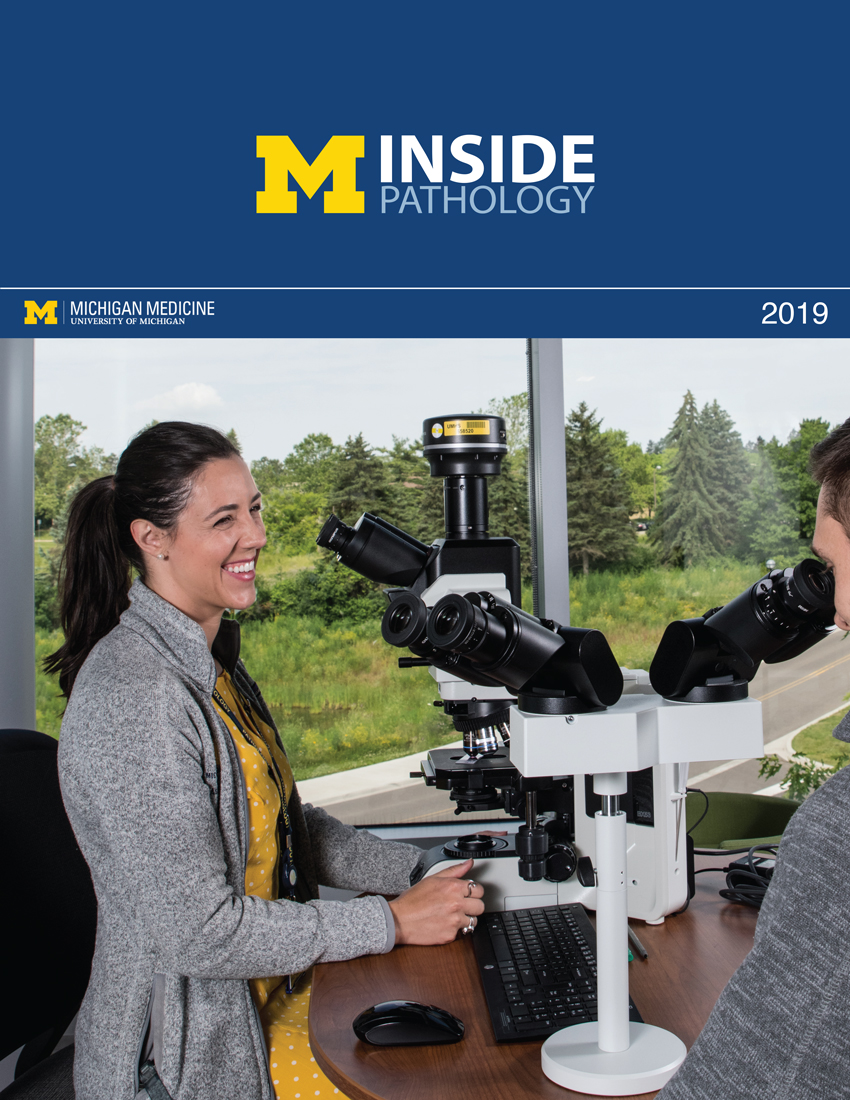 ON THE COVER
Residents Ashley Bradt (left) and William Perry work at a multi-headed scope in our new facility. |
newsletter
INSIDE PATHOLOGYAbout Our NewsletterInside Pathology is an newsletter published by the Chairman's Office to bring news and updates from inside the department's research and to become familiar with those leading it. It is our hope that those who read it will enjoy hearing about those new and familiar, and perhaps help in furthering our research. CONTENTS
|
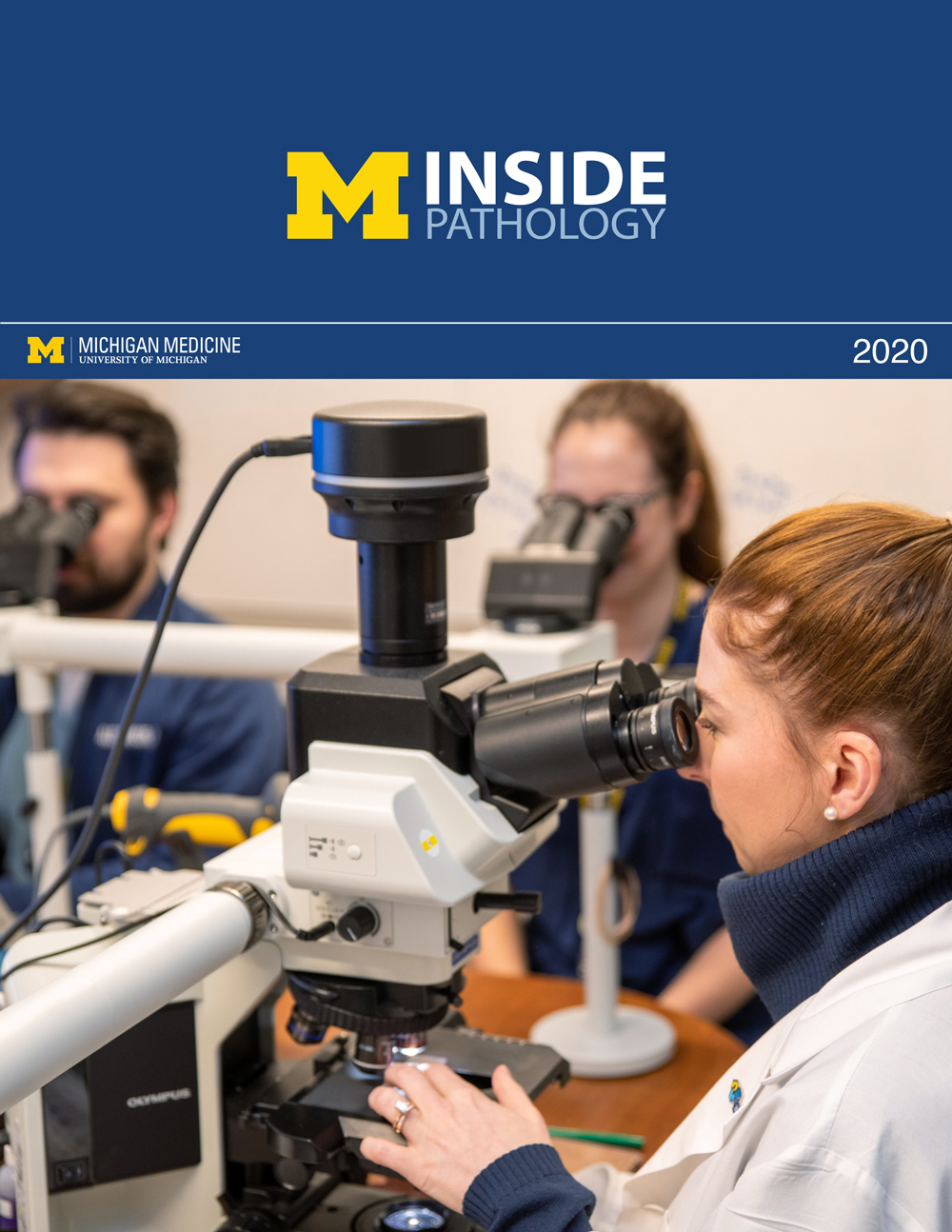 ON THE COVER
Dr. Kristine Konopka (right) instructing residents while using a multi-headed microscope. |
newsletter
INSIDE PATHOLOGYAbout Our NewsletterInside Pathology is an newsletter published by the Chairman's Office to bring news and updates from inside the department's research and to become familiar with those leading it. It is our hope that those who read it will enjoy hearing about those new and familiar, and perhaps help in furthering our research. CONTENTS
|
 ON THE COVER
Patient specimens poised for COVID-19 PCR testing. |
newsletter
INSIDE PATHOLOGYAbout Our NewsletterInside Pathology is an newsletter published by the Chairman's Office to bring news and updates from inside the department's research and to become familiar with those leading it. It is our hope that those who read it will enjoy hearing about those new and familiar, and perhaps help in furthering our research. CONTENTS
|
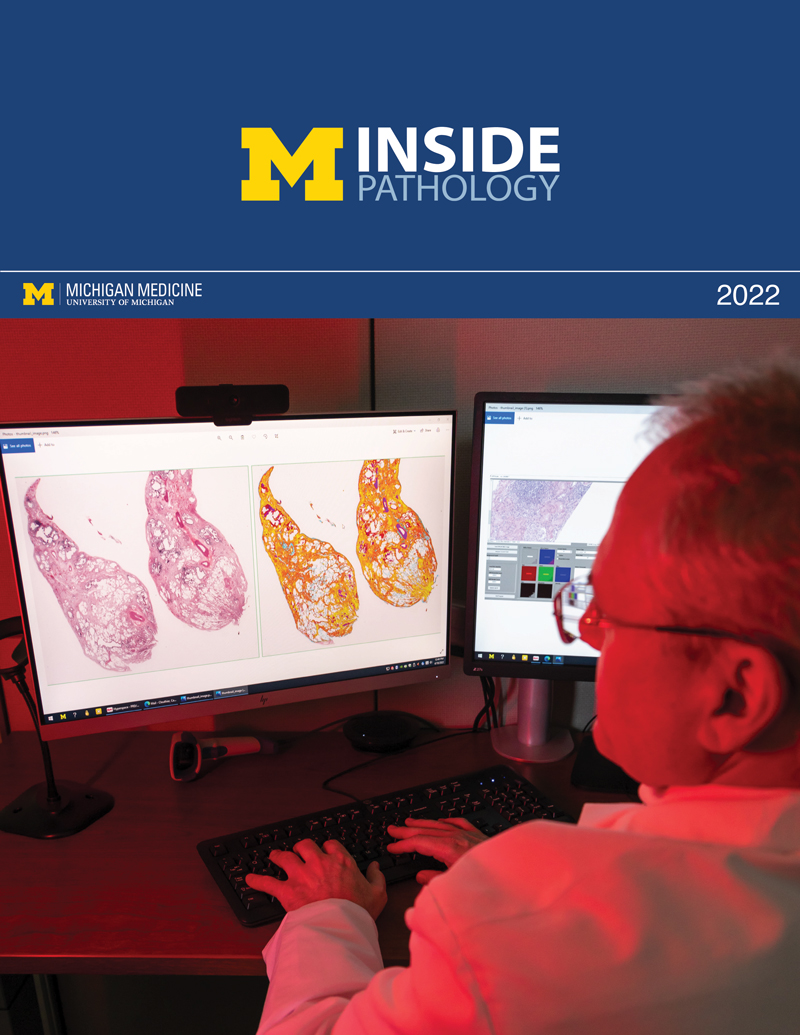 ON THE COVER
Dr. Pantanowitz demonstrates using machine learning in analyzing slides. |
newsletter
INSIDE PATHOLOGYAbout Our NewsletterInside Pathology is an newsletter published by the Chairman's Office to bring news and updates from inside the department's research and to become familiar with those leading it. It is our hope that those who read it will enjoy hearing about those new and familiar, and perhaps help in furthering our research. CONTENTS
|
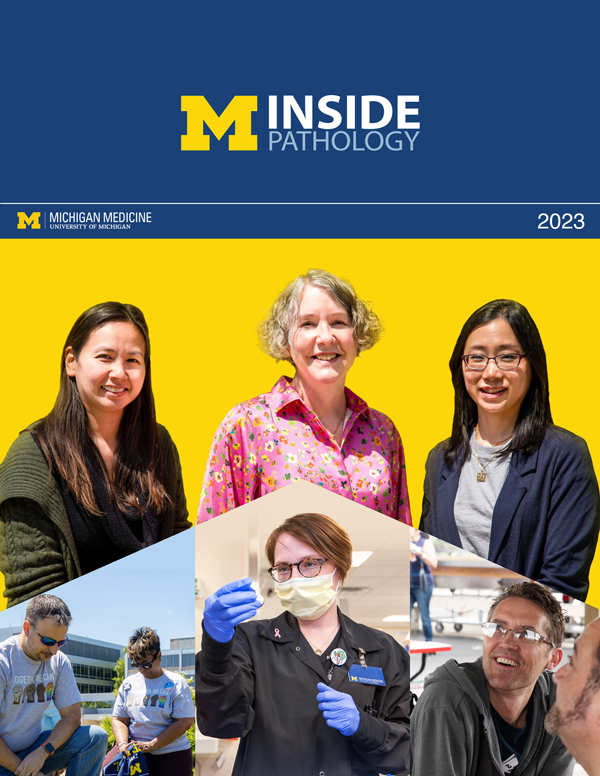 ON THE COVER
(Left to Right) Drs. Angela Wu, Laura Lamps, and Maria Westerhoff. |
newsletter
INSIDE PATHOLOGYAbout Our NewsletterInside Pathology is an newsletter published by the Chairman's Office to bring news and updates from inside the department's research and to become familiar with those leading it. It is our hope that those who read it will enjoy hearing about those new and familiar, and perhaps help in furthering our research. CONTENTS
|
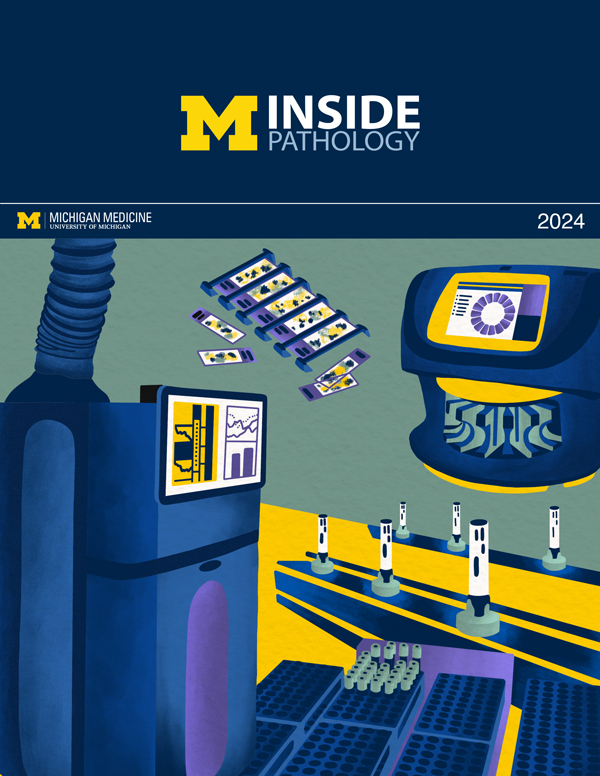 ON THE COVER
Illustration representing the various machines and processing used within our labs. |
newsletter
INSIDE PATHOLOGYAbout Our NewsletterInside Pathology is an newsletter published by the Chairman's Office to bring news and updates from inside the department's research and to become familiar with those leading it. It is our hope that those who read it will enjoy hearing about those new and familiar, and perhaps help in furthering our research. CONTENTS
|
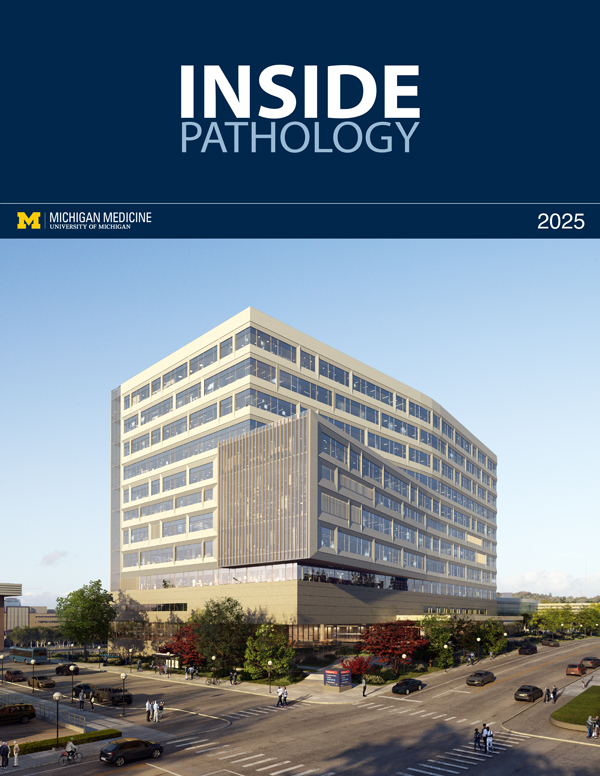 ON THE COVER
Rendering of the D. Dan and Betty Khn Health Care Pavilion. Credit: HOK |
newsletter
INSIDE PATHOLOGYAbout Our NewsletterInside Pathology is an newsletter published by the Chairman's Office to bring news and updates from inside the department's research and to become familiar with those leading it. It is our hope that those who read it will enjoy hearing about those new and familiar, and perhaps help in furthering our research. CONTENTS
|
MLabs, established in 1985, functions as a portal to provide pathologists, hospitals. and other reference laboratories access to the faculty, staff and laboratories of the University of Michigan Health System’s Department of Pathology. MLabs is a recognized leader for advanced molecular diagnostic testing, helpful consultants and exceptional customer service.